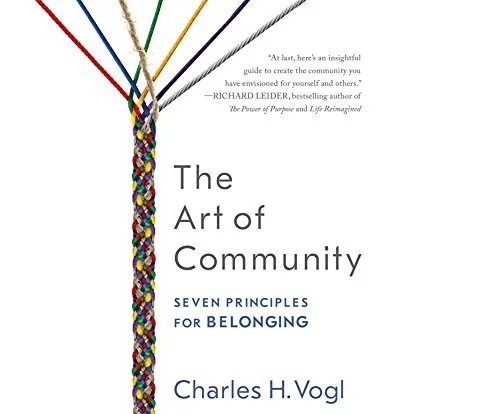
The Art of Community
Seven Principles for Belonging. The framework that directly shaped how I built Vanguard-Community from scratch.
Why This Book Matters to Me
[Add your personal reflection on how this book shaped Vanguard-Community's design.]
Key Ideas Applied
Boundaries
[How you defined who belongs in Vanguard-Community and why]
Initiation
[How new members are welcomed and integrated]
Rituals
[Recurring practices that build shared identity]
Symbols
[Visual and verbal markers of belonging]
Critical Engagement
Where I diverge
What the book argues
"Strong boundaries create belonging. The more exclusive a community feels, the more members value their membership."
In the Moroccan context, inclusive communities with low barriers scale faster and create more impact than exclusive ones.
Vogl's boundary theory works for professional associations, fraternities, and premium communities where scarcity creates value. But in Morocco's educational landscape — where structured peer support is nearly nonexistent — the priority isn't exclusivity but accessibility. The students and graduates who need community most are the ones least likely to overcome high barriers to entry. Inclusion-first design trades some depth of belonging for breadth of impact, which is the right tradeoff when the baseline is zero.
Evidence from my experience
Vanguard-Community has no application process, no fees, and no selection criteria. This inclusive approach enabled 60 beneficiaries in 3 months — a pace that would have been impossible with Vogl's recommended boundary-setting rituals. The belonging emerged from participation, not from gatekeeping.
What the book argues
"Emotional belonging — the feeling of being seen, known, and valued — is the primary driver of community retention."
Emotional belonging is necessary but not sufficient — measurable skill development is equally important for retention.
Vogl focuses almost entirely on the emotional dimension of community. But for students and early-career professionals, community participation must produce tangible outcomes — improved skills, better opportunities, concrete capabilities. Emotional belonging without growth feels hollow. Growth without belonging feels transactional. The most durable communities deliver both.
Evidence from my experience
Vanguard-Community's retention came from both dimensions: the collective governance created emotional belonging, while the structured activities (workshops, skill-sharing sessions) created measurable growth. Members stayed because they were both connected and developing — not just one or the other.
Professional Relevance
How this shapes my professional practice
Team Building
Understanding belonging mechanics helps build teams that retain talent and collaborate effectively.
Organizational Design
Governance structures from community design translate directly to department structures and stakeholder alignment.
Change Management
Rituals and symbols create organizational identity — essential for onboarding and managing transitions.
Stakeholder Engagement
Community principles apply to client relationships, partner networks, and internal stakeholder management.