Anatomy of a 41-page business plan
A jury reads a business plan the way an auditor reads a file: looking for the question you didn't answer. The 41 pages of the TawjihYou plan were not an achievement — they were a checklist of questions, answered in order, before they could be asked.
TawjihYou took 3rd place — "Coup de Cœur" for viability — at Pitch Your Vision, Fès, 2023. These notes reuse its plan skeleton verbatim.
01The spine: seven blocks, seven jobs#
- Executive summary — one page, numbers first. Competencies, people engaged, ask, and the single sentence of positioning. If the jury reads only this page, it must still understand the venture.
- Problem & beneficiary. Who loses what, today, and how we measure the loss. No beneficiary, no venture.
- Solution & position. The Business Model Canvas on one spread, then one paragraph per canvas box. The canvas is the map; the paragraphs are the territory.
- Market. Size with sources, three named competitors, and one honest table: what they do that we won't.
- Model. Revenue lines, pricing logic, and the assumption each line depends on — written out loud, so nobody can accuse us of hiding them.
- Financials. Three-year projection, break-even, and a sensitivity page: what happens to the plan if enrolments arrive at half speed.
- Ask & roadmap. What we want, by when, and the evidence we will produce at each milestone. A plan is a promise with dates.
02What I would cut today#
The literature review. It earned respect and wasted attention — the jury trusts evidence from the field before citations. And the founder story, buried on page 30, belongs on page 2: people fund people before they fund models.
03What I would never cut#
The sensitivity page. Every plan shows its best case; only an honest plan shows its half-speed case. That page produced the jury's "Coup de Cœur" remark about viability — the distinction we actually won.
A business plan is not a document. It is a rehearsal of the questions.
04The template#
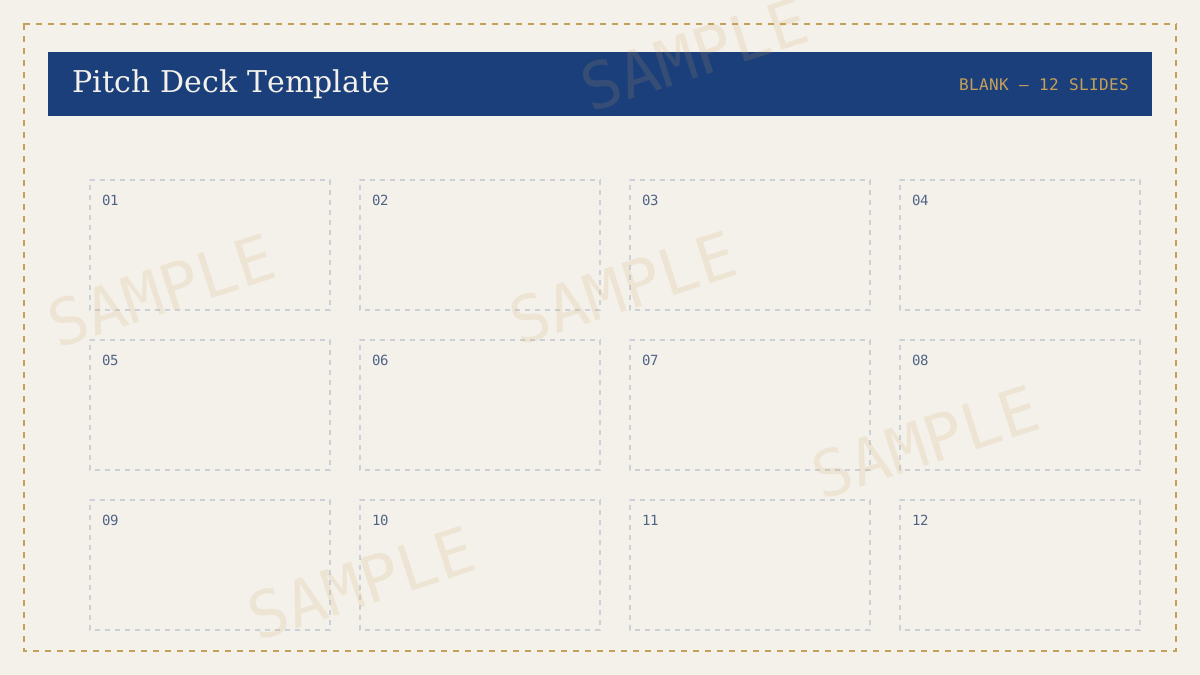
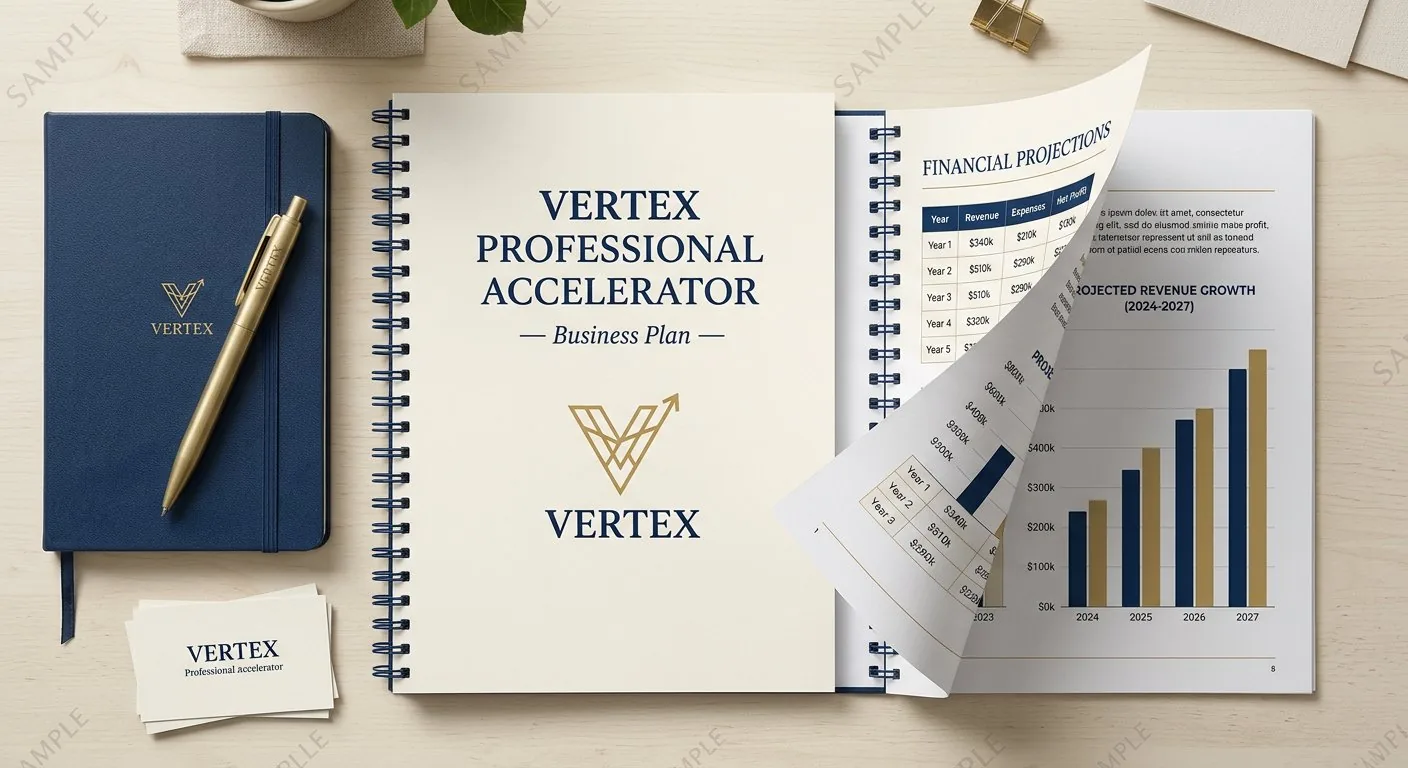
The blank Business Model Canvas used in section 3, and the 12-slide deck template built from section 1–7 headings, live in the Vertex plan case study. Take them; a template is a promise that someone before you survived the same room.