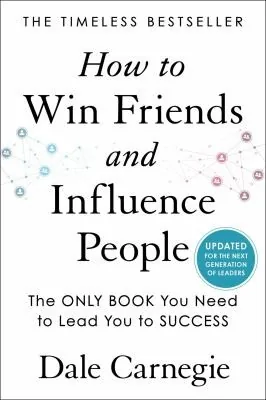
How to Win Friends and Influence People
The timeless discipline of genuine interest. Influence, Carnegie argues, is earned by understanding people before asking anything of them.
Why This Book Matters to Me
I first read Carnegie as a teenager and have returned to it before every major community initiative since. Its central demand — that influence begins with genuine interest in the other person — is the seed from which Vanguard-Community grew: a network built by asking people about their ambitions before asking anything of them.
What keeps the book on my shelf is not its techniques but its order of operations: understand before persuading, appreciate before critiquing, listen before speaking. That order applies as much to an audit interview or a classroom as it did to Carnegie's sales offices.
Key Ideas Applied
Become Genuinely Interested
You earn influence in months by being interested in others, not years by trying to be interesting. Every TawjihYou orientation session starts with the student's story, not our pitch.
Listen More Than You Speak
Encouraging people to talk about what they know reveals information no questionnaire captures — in community interviews, audit walkthroughs, and mentorship alike.
Honor the Name and the Face
Remembering names and greeting people fully is cheap respect with compound returns; in our culture it is also basic adab — courtesy.
See From the Other Side
Arousing in the other person an eager want begins with understanding what they actually want — the habit behind every partnership my ventures have secured.
Favorite Quotes
On Friendship"You can make more friends in two months by becoming interested in the other person than you can in two years by trying to get the other person interested in you."
On Argument"The only way to get the best of an argument is to avoid it."
On Respect"A person's name is, to that person, the sweetest and most important sound in any language."
Connected To
Community PracticeCommunity Building — where these principles became a method
Related ReadingCrucial Conversations — what to do when the conversation turns difficult
Critical Engagement
Where I diverge
What the book argues
"Carnegie's techniques were forged in American sales culture, where warmth between strangers is currency."
In Morocco's relational culture, warmth is expected inside existing bonds — and technique without sincerity reads as flattery, which destroys trust.
Carnegie teaches behaviors: smile, remember names, make the other person feel important. In a collectivist context those behaviors are obligations tied to real relationships; performed without genuine regard, they expose the performer. Influence here is built by consistent presence over time, not by a charming first meeting.
Evidence from my experience
Vanguard-Community grew through showing up — weekly circles, kept promises, remembered favors — not through charisma at first contact. The techniques only worked after the sincerity was proven.
What the book argues
"The book counsels avoiding arguments and letting the other person save face at almost any cost."
An auditor cannot always avoid disagreement; sometimes the respectful act is a clear, uncomfortable finding.
Carnegie optimizes for harmony and likability. My profession sometimes requires the opposite: stating a finding the client dislikes, in a way that preserves the relationship but not the comfort. Avoiding that conversation would betray the mandate.
Evidence from my experience
I pair Carnegie with Crucial Conversations: Carnegie sets the relational climate; crucial-conversation discipline carries the hard content. Findings delivered that way were accepted, not contested.
Professional Relevance
How this shapes my professional practice
Stakeholder & Client Relations
Opening with genuine interest transforms client meetings from interrogations into collaborations — core to consulting and audit.
Teaching Presence
Students engage with teachers who remember them; the name-and-story discipline underpins my 160+ classroom hours.
Community Leadership
Respect-based likability is the fastest trust capital a new community organizer can deposit.
Interviews & Discovery
Listening-first questioning improves every information-gathering setting, from audit interviews to user discovery.