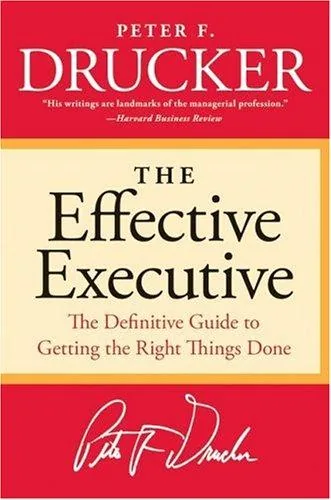
The Effective Executive
The definitive guide to getting the right things done. Effectiveness, Drucker argues, is not a talent but a learnable practice.
Why This Book Matters to Me
Drucker's premise — that effectiveness is a discipline anyone can learn — is the operating system behind how I lead. Managing time, focusing on contribution, building on strengths, and setting priorities are the habits behind coordinating 28 administrators and 160+ teaching hours.
The book moved me from being busy to being effective: asking 'what can I contribute?' before 'what am I owed?', and making few, well-considered decisions rather than many reactive ones.
Key Ideas Applied
Manage Time First
Effectiveness begins with knowing where your time actually goes; I record and consolidate my discretionary time before committing to new roles.
Focus on Contribution
Shifting from effort to contribution reframes every task as a result someone else can use — the mindset behind my teaching and mentorship.
Make Strength Productive
Performance is built on strengths, not the absence of weaknesses; I staff my ventures around what each person does superbly.
First Things First
Doing one thing at a time, in priority order, is how I sequence six ventures without burning out.
Favorite Quotes
On Time"Time is the scarcest resource, and unless it is managed nothing else can be managed."
On Effectiveness"Effectiveness is a habit. That is, a complex of practices; and practices can always be learned."
On Priorities"There is nothing so useless as doing efficiently that which should not be done at all."
Connected To
Leadership In PracticeCommunity Building — leading 28 administrators with a contribution mindset
Related ReadingThe 7 Habits — the complementary personal-effectiveness system
Critical Engagement
Where I diverge
What the book argues
"Drucker writes for the individual executive in a large organization."
In collectivist Moroccan contexts, effectiveness is relational — it depends on obligations and consensus, not only personal priorities.
Drucker's executive controls his own time and priorities. In my community work, priorities are negotiated across families, institutions and honorifics; saying 'no' carries social cost. Effectiveness here includes maintaining relationships that a purely individual model would deprioritize.
Evidence from my experience
Leading Vanguard-Community and Osboha 180 teams taught me that the 'contribution' question must be asked of the group, not just the self — a communal reading of Drucker.
What the book argues
"The book treats decision-making as a rational, sequenced process."
In volatile, resource-poor settings, decisions must be faster and more reversible than Drucker's model assumes.
Drucker favors few, major, well-deliberated decisions. Early-stage ventures in emerging markets face faster feedback loops; I pair his discipline with lean, reversible experiments so a wrong decision is cheap.
Evidence from my experience
TawjihYou's pivot and eventual pause were quick, evidence-based reversals — Drucker's rigor applied at startup speed.
Professional Relevance
How this shapes my professional practice
Management & Leadership
The contribution mindset and strengths-based staffing are directly applicable to management roles.
Project Management
First-things-first prioritization is the core of scope and schedule control.
Decision Quality
Structured, principle-based decisions reduce rework in audit and consulting engagements.
Personal Effectiveness
Time discipline underpins 160+ teaching hours alongside six ventures.